
Course Description
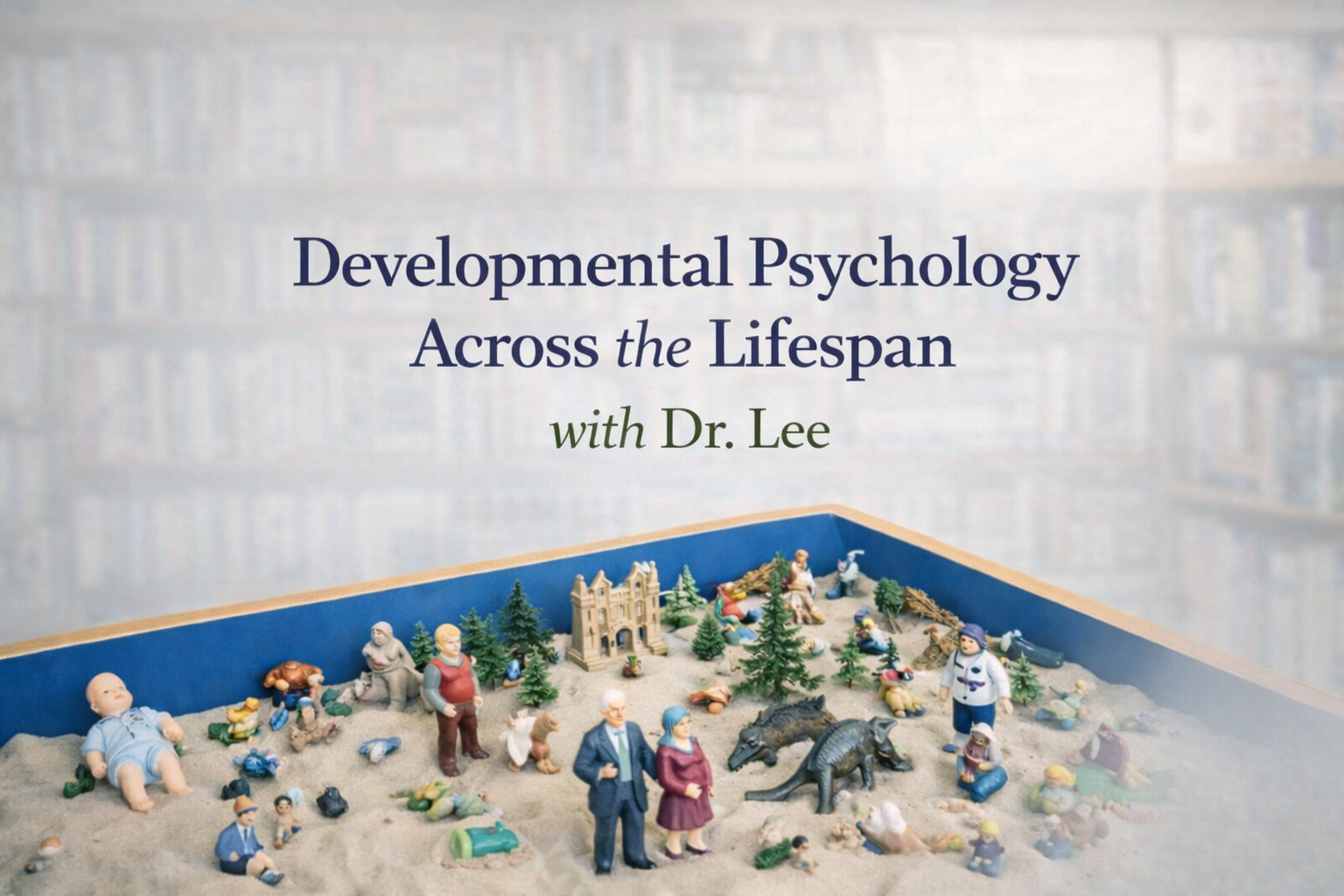
This graduate-level course examines human development from prenatal life through late adulthood through a clinical, trauma-informed, and experiential lens. Students explore biological, cognitive, psychosocial, and ecological influences on development and learn how these principles directly inform therapeutic and helping practices.
Rather than relying solely on lectures or exams, this course emphasizes applied, embodied learning. Students demonstrate their understanding through virtual sand tray work, expressive arts activities, guided reflection, and APA-formatted professional writing that integrates developmental theory with real-world clinical practice. Each module intentionally bridges research and application, supporting students in translating developmental knowledge into meaningful, strengths-based interventions.
Developmental Psychology Across the Lifespan: A Clinical and Expressive Arts Perspective
3 Credits
Instructional Time Commitment: This course includes a minimum of 45 instructional hours, consistent with professional board requirements for 3 graduate credits. Students typically engage 4–6 hours per week across the 10-week course period.
Ideal Participants
This course is especially beneficial for:
· Educators and school-based professionals supporting learners across developmental stages
· Helping professionals and human service providers working with children, adolescents, or families
· NADTA Alternative Track students fulfilling developmental psychology requirements through an applied, arts-based approach
· Graduate learners seeking experiential and practice-oriented developmental training
Students complete the course with both a strong theoretical foundation and practical, creative tools that can be immediately integrated into clinical, educational, and therapeutic settings.
Course Instructor
The course is designed and taught by Dr. Tanja L. Lee, Registered Drama Therapist and Certified Tele’Drama Practitioner, who holds an Online Psychology Teaching Certification, qualifying her to develop and teach graduate-level psychology courses in virtual learning environments. This preparation ensures rigorous academic standards alongside engaging, accessible, and experiential instruction.
Course Progression Policy
It is the policy of B Scene B Heard, LLC that no more than one module may be submitted for grading within a seven-day period. Research on best practices in adult and experiential learning demonstrates that adequate time is necessary to process, reflect on, and integrate new material for meaningful and lasting learning.
Because this course includes assigned readings, experiential sand tray work, applied activities, and APA-formatted analytical writing, students are expected to engage thoughtfully rather than move rapidly through the content.
Developmental Psychology Across the Lifespan: A Clinical and Expressive Arts Perspective
-
-
-
Sample Course Layout
We break things down into simple, manageable parts so you never feel overwhelmed.
We break things down into simple, manageable parts so you never feel overwhelmed.
-
Module 1 Introduction: Theory and Research Foundations
We break things down into simple, manageable parts so you never feel overwhelmed.
We break things down into simple, manageable parts so you never feel overwhelmed.
-
-
-
Module 3: Infancy (Birth–2 Years)
We break things down into simple, manageable parts so you never feel overwhelmed.
We break things down into simple, manageable parts so you never feel overwhelmed.
-
-
-
-
-
-
-